Corporates

LATAM’s partnership with Delta Air Lines is credit positive

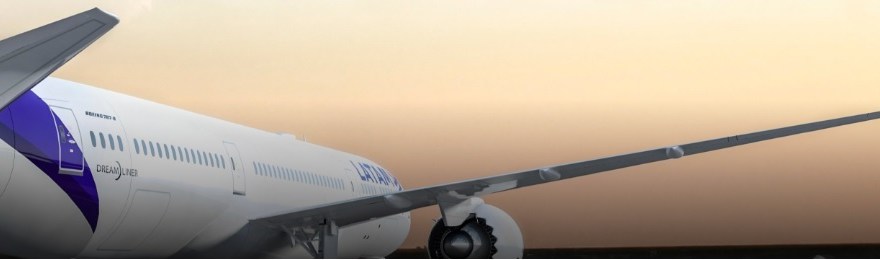
Chile, September 27, 2019 – Delta Air Lines, Inc. (Baa3 stable) and LATAM Airlines Group S.A. (LATAM, Ba3 stable) announced that they had entered a strategic partnership in which Delta will acquire 20% of LATAM’s shares for $1.9 billion through a secondary public tender offer for $16 per share. The partnership also includes Delta investing $350 million in LATAM to support the creation of the partnership. Additionally, Delta will purchase four Airbus A350-900 aircraft that LATAM operates and assume LATAM’s purchase commitments for 10 A350s scheduled for delivery between 2020 and 2025. Delta will be represented on LATAM’s board of directors as one of the company’s largest shareholders.
We view the announced partnership as credit positive for LATAM because it will create a complementary route connecting the Americas that, according to the airlines, will be the strongest airline route network between North and South America. The partnership will also provide strategic, operational and financial benefits for LATAM.
The $350 million investment will not increase LATAM’s liquidity because it will largely be used to create the partnership. But the acquisition of the four A350-900 aircraft and the assumption of the commitments for the 10 A350s scheduled for delivery will improve LATAM’s free cash flow generation and reduce its forecasted debt by over $2 billion by 2025, which is around 20% of the company’s gross indebtedness that totaled $10.6 billion at the end of June 2019. There will be no immediate effect on the company’s credit metrics because the commitments are scheduled to be delivered between 2020 and 2025.
LATAM will withdraw from the oneworld global airline alliance. Presumably, a large portion of the $350 million investment in the partnership will fund LATAM’s oneworld exit. American Airlines, Inc. (Ba3 stable), a oneworld member, in a 26 September press release, noted that the Chilean Supreme Court had ruled against an application for American and LATAM’s to form a joint business arrangement, which influenced the decision for American and LATAM to part ways.
Delta’s $1.9 billion purchase price for the equity stake values LATAM’s equity at $9.5 billion, which compares with a pre-announcement market cap of about $5.5 billion, or a per share price of about $9.00. The tender offer will be at $16.00 per share, an almost 80% premium to LATAM’s average share price over the past 30 days.
Delta and LATAM’s transactions are subject to regulatory approvals, and regulatory risk remains given the Chilean Supreme Court’s ruling against the proposed joint business arrangement between American and LATAM. However, in the case of Delta and LATAM, there is minimal overlap today between the airlines’ capacity, which was not the case with LATAM and American.
LATAM is a Chile-based airline holding company formed by the business combination of LAN Airlines S.A. of Chile and TAM S.A. of Brazil in June 2012. LATAM is the largest airline group in South America, with a local presence for domestic passenger services in Brazil, Chile, Peru, Ecuador, Argentina and Colombia. The company also provides intra-regional and international passenger services, and has a cargo operation using the belly space on passenger flights and dedicated freighter service. For the 12 months that ended June 2019, LATAM generated $9.75 billion in net revenue and carried 71.1 million passengers and 900,000 tons of cargo.
With an industry-leading global network, Delta and the Delta Connection carriers offer service to more than 300 destinations in more than 50 countries on six continents. Headquartered in Atlanta, Delta had over 88,000 full-time equivalent employees and operated a fleet of more than 1,200 aircraft in 2018. The company reported $44.4 billion of revenue in 2018.

Credit Outlook: 30 September. Pg. 4
Moodys
Corporates

Clear Channel’s equity offering will reduce debt, but leverage will remain high

United States, July 26, 2019 – Clear Channel Outdoor Holdings, Inc.’s (CCO) $350 million equity offering on 25 July is credit positive because we expect that the company will use the net proceeds to repay $333.5 million of subsidiary Clear Channel Worldwide Holdings, Inc.’s (CCW, B3 stable) 9.25% senior subordinated notes due in 2024 or $383.7 million if the underwriters exercise their option to purchase additional shares. However, we expect that pro forma leverage levels will remain high at 8.5x, although down from 9.1x as of first-quarter 2019 (excluding our lease adjustments). Interest expense is projected to decrease by approximately $31 million and result in a slight improvement in interest coverage to 1.6x from 1.5x as of first-quarter 2019.

CCW’s pro forma EBITDA minus capex to interest coverage ratio will remain weak at 1x and up slightly from 0.9x as of first-quarter 2019. Free cash flow has been negative over the past several years including $80 million of negative free cash flow as of the last 12 months to first-quarter 2019 and will still be negative pro forma for the transaction at negative $50 million following the $31 million in interest expense savings.
CCW is expected to benefit from the elimination of the trademark license expense ($38.7 million in 2018) and the positive trends for the outdoor industry in North America, Latin America, and Europe, but faces more challenging trends with its joint venture in China. We also note that although CCW’s debt is denominated in US dollars, a substantial part of its business is in international currencies that can negatively affect results if the currencies that it does business in decline relative to the dollar. While leverage is modestly improved from the transaction, it still remains very high and leaves the company vulnerable to economic declines in the global economy.
The equity offering also provides clarity on the strategy for CCO following the separation from iHeartCommunications, Inc. (B2 stable). The new owners of the company are expected to try to grow the business instead of selling off all or parts of the business in the near term, as can be the case when former debtholders become equity holders. While CCO may consider attractive offers for select assets, we do not expect large-scale transactions that would lead to a substantial change in the portfolio of assets. Over the longer term, the strategy has the potential to change because many of the former debtholders are not naturally long-term strategic equity investors and may seek to exit their equity position in time.
CCW is an intermediate holding company that houses the assets of the international outdoor advertising operating segment of CCO. Headquartered in San Antonio, CCO is a leading global outdoor advertising company that generated last-12-month revenue of approximately $2.7 billion as of first-quarter 2019. Following the exit of former parent iHeartCommunications’ bankruptcy process, former iHeart debtholders owned 89% of CCO’s equity.

Credit Outlook: 29 July 2019. Pg. 6
Moodys

Corporates

Compania General de Combustibles’ Proposed Notes Assigned Preliminary ‘B’ Rating; ‘B-‘ Issuer Rating On Watch Positive

  • Argentina-based oil and gas exploration and production (E&P) company Campania General de Combustibles S.A. (CGC) recently announced a debt refinancing that will extend its debt maturity profile and materially reduce refinancing risk.
  • BUENOS AIRES (S&P Global Ratings) July 26, 2019–S&P Global Ratings assigned its preliminary ‘B’ rating to CGC’s proposed bond issuance. At the same time, we affirmed our ‘B-‘ issuer credit rating (ICR) on CGC and placed it on CreditWatch with positive implications.
  • The CreditWatch positive reflects that there’s a high chance that the company will be able to issue the bond in the next few days, which will prompt us to upgrade CGC to ‘B’ with a stable outlook.

The preliminary rating on the proposed senior unsecured notes reflects that the issuance would materially reduce CGC’s refinancing risk. It also incorporates the imminent upgrade of the ICR once the transaction becomes effective. In the meantime, we’re placing the ICR on CreditWatch positive.

The rating on the notes is preliminary pending their successful issuance, and assuming that the notes’ final terms and conditions do not differ materially from the draft documents presented to us.

Corporates

Empresas Copec S.A. And Copec’s Outlooks Revised To Negative On Higher Leverage; ‘BBB’ Ratings Affirmed

  • Empresas Copec (E-Copec) has an ambitious investment plan for about $2.7 billion this year and $2.1 billion in 2020.
  • Since May 2019, pulp prices have sharply fallen and we only expect modest recovery starting in the fourth quarter of the year. This will take a toll on the group’s EBITDA generation.
  • We now expect the company to post adjusted debt-to-EBITDA above 3.0x in 2019 and 2020.
  • SAO PAULO (S&P Global Ratings) July 29, 2019–S&P Global Ratings revised its outlook on E-Copec and subsidiary Compañía de Petróleos de Chile Copec S. A. (Copec) to negative from stable and affirmed the ‘BBB’ long-term issuer credit ratings on both companies.
  • The negative outlook reflects the one-in-three likelihood of a one-notch downgrade over the next 24 months if E-Copec cannot rapidly reduce leverage once the high investment cycle comes to an end.

The outlook revision reflects higher leverage expectations for the next two years following a more aggressive investment strategy in recent years.

E-Copec (the group) has ambitious investment plans for the next couple of years, especially at its forest products subsidiary, Celulosa Arauco y Constitución (Arauco; BBB-/Stable/–). Arauco is investing in a new pulp mill (Project MAPA) with 1.56 million tons of bleached hardwood pulp capacity for $2.35 billion, to be mostly disbursed during this year and the next. Additionally, through Alxar S.A. (not rated), the group owns 40% of the Mina Justa copper project in Peru. This project will demand about $260 million of direct investment between 2019 and 2020 from E-Copec, while it will raise project finance debt, adding $360 million to the group’s debt. These two large projects add to the already considerable capital expenditures (capex) that the group needs to maintain operations, for some smaller projects, and to pay $160 million for the panel business that Arauco acquired in Mexico.

Furthermore, the fuel and lubricant distribution subsidiary, Copec, which historically has had low leverage and provided some cushion against a more aggressive leverage profile at Arauco, is emerging from a period of acquisitions. Between 2016 and 2018, Copec acquired ExxonMobil Andean Holding LLC (EMal) and Mapco, resulting in a considerable increase in leverage that made its debt-to-EBITDA ratio peak at 3.0x as of March 31, 2019, compared to 1.8x in 2015. We expect Copec’s debt to EBITDA to remain close to 2.8x in 2019 and then near 2.5x in 2020.

We believe the higher capex, depressed operating cash flow generation amid lower pulp prices, and higher leverage at Copec will combine to push E-Copec’s debt to EBITDA to 3.2x-3.4x in 2019 and 2020.

Corporates

InterCement Brasil S.A. Downgraded To ‘B’ From ‘B+’ On Continuing Challenging Business Conditions And Higher Leverage

  • Despite InterCement’s recent asset sales and operations overhaul, performance and leverage should remain weak through 2019 and 2020.
  • Cement demand in Brazil, where the company has idled nearly 50% of its capacity would remain flat through 2019. In the meantime, the company’s Argentine operations are struggling with the economic downturn and political uncertainties.
  • On July 24, 2019, S&P Global Ratings downgraded the Brazil-based cement producer to ‘B’ from ‘B+’ on global scale and to ‘brA’ from ‘brAA’ on national scale. We also lowered our debt rating to ‘B’ from ‘B+’.
  • The stable outlook reflects that the company’s leverage metrics would probably remain close to 5.0x through 2019, improving to 3.5x-4.0x towards 2023. We factor in some level of financial assistance from its parent company, Mover, in case of need.

SAO PAULO (S&P Global Ratings) July 24, 2019–The downgrade reflects InterCement’s likely lower earnings and EBITDA for the next 12 months due to higher risks to the company’s competitive advantages. After the disposal of the Portuguese and Cape Verde operations last year, InterCement’s footprint has shrunk and remains concentrated in Brazil and Argentina, where operating conditions are subpar.

The cement market in Brazil is recovering at a sluggish pace in 2019. We expect InterCement to sell close to 8 million tons of cement in 2019, compared with 12.5 million in 2014 and 2015. Lack of market confidence and significant infrastructure projects are the main factors are behind the market slowdown. In 2020, conditions may slightly improve for long-term investment decisions depending on how the market perceives mid-term risks.

The Argentine subsidiary, Loma Negra, currently generates 55% of total cash flows. Despite volatile economic conditions, with currency swings and high inflation pressuring costs, Loma Negra’s solid market position and the government’s ambitious infrastructure plan allowed the subsidiary to maintain profitable operating margins. InterCement’s main project, L’Amali II, would increase operating efficiency at the Argentine division starting in 2020, but political risks may erode the subsidiary’s capacity to generate hard currency in the future, if economic problems exacerbate under the next administration.

After several changes at Mover subsidiaries’ portfolio, InterCement now accounts for 80%-90% of the group’s EBITDA. Apart from InterCement’s financial obligations, the group also guarantees Estaleiro Atlantico Sul’s (EAS) debt (about R$660 million) and is ultimately responsible for the fine stemming from the leniency agreement fine determined at the E&C subsidiary level (about R$800 million). After the sale of its share at CPFL Energia S.A., Mover repaid almost all of its corporate debt and has currently about R$1.8 billion in cash. Mover is also has a 15% minority interest in CCR S.A., with current market value of about R$4.5 billion.

In December 2018, Mover decided to inject about R$300 million into InterCement. The latter returned the proceeds to Mover after the sale of the Portuguese assets.